


Could Low Iron Be Making Your Perimenopause Symptoms Worse? The Hidden Iron–Gut–Thyroid Connection Every Woman Should Know

For many women, perimenopause brings unexpected symptoms:
Fatigue
Brain fog
Hair loss
Anxiety
Poor concentration
Low mood
Feeling cold
Reduced exercise tolerance
These symptoms are often blamed entirely on fluctuating hormones.
However, there may be another important piece of the puzzle: iron status.
This topic resonates deeply with me personally.
As a teenager, I experienced extremely painful and heavy periods, which likely contributed to low iron levels. Years later, after thyroid cancer treatment and ongoing hormone challenges, I became increasingly interested in understanding the complex relationship between iron, thyroid function, digestion and women's health.
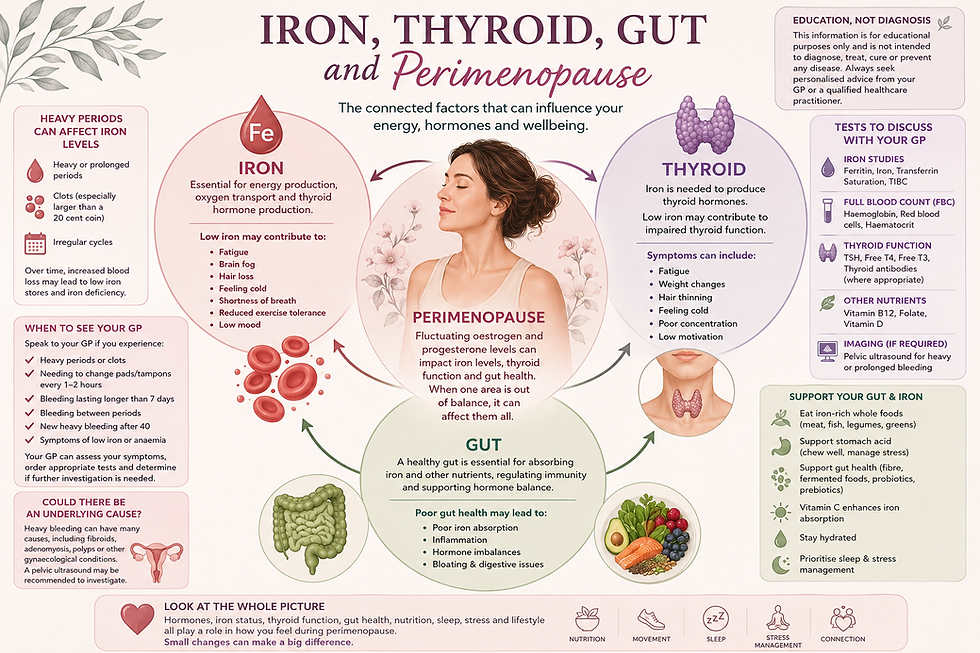
Why Iron Matters During Perimenopause
Iron is essential for:
✔️ Energy production
✔️ Oxygen transport
✔️ Cognitive function
✔️ Healthy hair growth
✔️ Immune function
✔️ Thyroid hormone production
Without adequate iron, cells may struggle to produce energy efficiently.
This can contribute to symptoms such as fatigue, reduced resilience, poor concentration and reduced exercise capacity.
How Oestrogen Fluctuations May Influence Iron Status
During perimenopause, hormone levels do not simply decline.
Instead, oestrogen and progesterone often fluctuate significantly.
Some women experience:
Heavier menstrual bleeding
More frequent periods
Irregular cycles
Prolonged bleeding
Over time, increased menstrual blood loss may affect iron stores.
This is one reason why women in their 40s and early 50s may benefit from discussing iron testing with their healthcare practitioner when symptoms such as fatigue, dizziness or hair loss are present.
When to Speak With Your GP
If you are experiencing symptoms such as:
Persistent fatigue
Brain fog
Hair loss
Shortness of breath
Dizziness
Heavy or prolonged periods
Changes in menstrual patterns during perimenopause
it may be worth discussing further investigation with your GP.
Depending on your symptoms and medical history, your GP may recommend blood tests and other investigations to help identify potential contributing factors.
Blood Tests to Discuss With Your GP
Your GP may consider testing:
Iron Studies
Ferritin
Iron
Transferrin Saturation
Total Iron Binding Capacity (TIBC)
Full Blood Count (FBC)
Haemoglobin
Red blood cells
Haematocrit
Thyroid Function Tests
TSH
Free T4
Free T3
Thyroid antibodies (where appropriate)
Other Nutrients Often Considered
Vitamin B12
Folate
Vitamin D
Homocysteine
Results should always be interpreted in the context of your symptoms, health history and other clinical findings.
Could Heavy Periods Have an Underlying Cause?
While hormonal fluctuations are common during perimenopause, heavy or prolonged bleeding should not automatically be dismissed as "just hormones."
Depending on your symptoms, your GP may recommend further investigation, which could include a pelvic ultrasound.
A pelvic ultrasound may help assess:
Uterine fibroids
Endometrial thickening
Ovarian cysts
Adenomyosis
Other structural factors that may contribute to heavy menstrual bleeding
Identifying potential causes of heavy bleeding can be an important step when investigating ongoing low iron levels.
The Iron–Thyroid Connection
Iron plays an important role in thyroid hormone production.
Iron-dependent enzymes help support the conversion processes involved in thyroid hormone synthesis.
Research suggests that low iron status may be associated with impaired thyroid function in some individuals.
Because symptoms of low iron and thyroid dysfunction can overlap, it is important not to assume that fatigue or hair loss are solely related to hormones.
Common overlapping symptoms include:
Fatigue
Hair thinning
Brain fog
Feeling cold
Reduced motivation
Poor concentration
Why Stomach Acid Matters
Having enough iron in food is only part of the story.
The body must also be able to absorb it.
Stomach acid plays a key role in helping release iron from food and supporting absorption further down the digestive tract.
Factors that may affect stomach acid production include:
Ageing
Chronic stress
Certain medications
Digestive disorders
Long-term antacid use
This is one reason why digestive health can be an important consideration when investigating nutrient deficiencies.
The Gut Connection
The gut is involved in:
Nutrient absorption
Immune regulation
Inflammation
Hormone metabolism
When digestive function is compromised, it may influence the body's ability to absorb nutrients including iron, vitamin B12 and other nutrients important for energy production.
This highlights why looking at symptoms in isolation rarely tells the full story.
Iron and Detoxification
The liver plays an important role in hormone metabolism, including the processing of used oestrogen.
Nutrients such as iron support many enzymatic processes throughout the body.
While iron itself is not a detoxification supplement, maintaining adequate nutritional status supports overall metabolic function and wellbeing.
The relationship between hormones, liver function, digestion and nutrient status is highly interconnected.
Key Takeaway
If you're experiencing:
✓ Fatigue
✓ Brain fog
✓ Hair loss
✓ Poor concentration
✓ Low mood
✓ Feeling cold
✓ Reduced exercise tolerance
It may be worth discussing both iron status and thyroid health with your healthcare practitioner, rather than assuming these symptoms are simply "normal perimenopause."
Perimenopause is not only about hormones.
It is also about:
• Nutrient status
• Gut health
• Digestion
• Stress
• Sleep
• Thyroid function
• Liver health
Understanding the bigger picture can help uncover important pieces of the puzzle.
Further Reading
📚
• Fix Iron First – Dr Libby Weaver
• The Period Repair Manual – Lara Briden
• The Hormone Repair Manual – Lara Briden
A great starting point for understanding the connection between iron, hormones and women's health. ✨
This article is for educational purposes only and is not intended to diagnose, treat or cure any medical condition. Always seek personalised advice from your healthcare practitioner.


Comments